
Tutorials
| No. | Tutorial Title | Organizer |
|---|---|---|
| 1 | Image-Based 3D Model Reconstruction: From Multi-View Geometry to Neural Rendering | Prof. Soohwan Song (Dongguk University) |
| 2 | Fun and Foundations of Swarm Systems and Control | Prof. Masaki Ogura (Hiroshima University) |
| 3 | Dynamically Embedded Model Predictive Control: Real-Time Operation, Constraint Satisfaction, and Stability | Prof. Hyungbo Shim (Seoul National University) |
| 4 | Learning-Based Control for Automotive Systems: From Semi-Parametric Dynamics Modeling to Online Policy Improvement | Prof. Heejin Ahn (KAIST) |
| 5 | From AI & Robotics Research to Railway Deployment | Dr. Calire Nicodeme (ALSTOM) |
Tutorial 1
Overview
| Time | Program | Speaker |
|---|---|---|
| 09:00 – 09:50 | Multi-View Stereo Theory and Practice: COLMAP / DUST3R / VGGT |
Prof. Soohwan Song |
| 09:55 – 10:05 | Break | |
| 10:05 – 11:00 | 3D Gaussian Splatting Theory and Practice, and Case Studies in Diffusion-Based 3D Generation |
Abstract
Presenter Biography
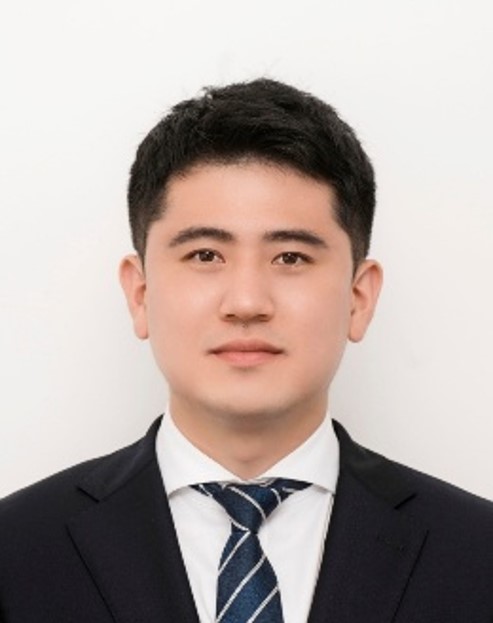 |
Prof. Soohwan Song Assistant Professor Department of Computer Science and Artificial Intelligence, Dongguk UniversityTopics of recent interest include – Physical AI – 3D Vision – Multi-Robot System Homepage: https://sites.google.com/view/smrlab/ |
Tutorial 2
Overview
| Time | Program | Speaker |
|---|---|---|
| 09:00 – 09:10 | Opening & Introduction | Organizer |
| 09:10 – 09:40 | Understanding and Control of Fish Schooling | Prof. Naoki Wakamiya (The University of Osaka) |
| 09:40 – 10:10 | Shepherding Dynamics: A Testbed for Nonlinear and Information-Limited Multi-Agent Control | Prof. Masaki Ogura (Hiroshima University) |
| 10:10 – 10:20 | Break | |
| 10:20 – 10:50 | Swarm Control of Biohybrid Robots: Challenges and Opportunities | Prof. Yang Bai (Hiroshima University) |
| 10:50 – 11:20 | From Early Warning to Re-stabilization: Dynamical Network Markers for Critical Transition Control | Dr. Hampei Sasahara (The University of Tokyo) |
Lecture 1
Presenter Biography
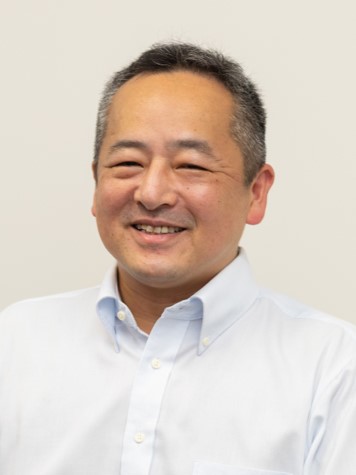 |
Prof. Naoki Wakamiya Graduate School of Information Science and Technology The University of Osaka https://www-waka.ist.osaka-u.ac.jp/index.php/en Topics of recent interest include: Bio-inspired ICT, Self-organization, Biological modeling, multi-agent systems |
Lecture 2
Presenter Biography
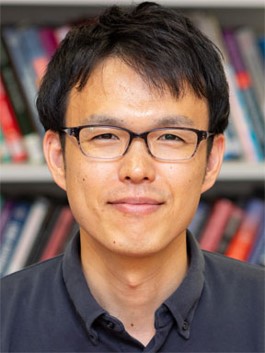 |
Prof. Masaki Ogura Graduate School of Advanced Science and Engineering Hiroshima University https://csslab.jp/en/ Topics of recent interest include: Swarm control, multi-agent systems, complex systems, artificial intelligence |
Lecture 3
Presenter Biography
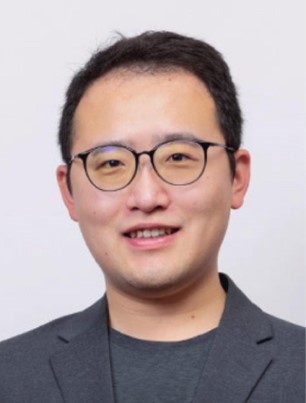 |
Prof. Yang Bai Specially Appointed Associate Professor Graduate School of Advanced Science and Engineering Hiroshima University https://scholar.google.com/citations?user=_PCUWNYAAAAJ Topics of recent interest include: Complex systems, cyborg systems, safe learning-based control, swarm intelligence |
Lecture 4
Presenter Biography
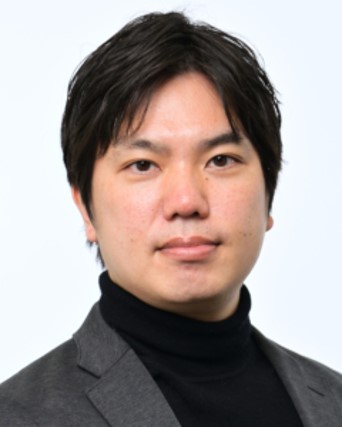 |
Dr. Hampei Sasahara Lecturer Graduate School of Information Science and Technology The University of Tokyo https://hampei.net/index_en Topics of recent interest include: – Data-driven Control – Control System Security – Autonomous Cybersecurity Agent – Control of Large-scale Systems |
Tutorial 3
Overview
| Time | Program | Speaker |
|---|---|---|
| 09:00 – 09:10 | Opening & Tutorial Overview | Prof. Hyungbo Shim (Seoul National University) |
| 09:10 – 09:30 | Motivation & Problem Formulation | Prof. Jin Gyu Lee (Seoul National University) |
| 09:30 – 10:00 | Constrained Optimization from a Control Perspective | Dr. Yong Joo Do (Seoul National University) |
| 10:00 – 10:10 | Break | |
| 10:10 – 10:40 | Soft-Constrained MPC: Feasibility and Stability | Dr. Hyeonyeong Jang (Seoul National University) |
| 10:40 – 11:10 | Dynamically Embedded MPC for Real-Time Operation | Prof. Hyungbo Shim (Seoul National University) |
| 11:10 – 11:20 | Break | |
| 11:20 – 11:50 | Constraint Satisfaction under Inexact Optimization | Dr. Hyungjo Byun (Seoul National University) |
| 11:50 – 12:10 | Simulation in Vehicle Control and Practical Considerations | Dr. Jinsung Kim (Hyundai Motor Company) |
Lecture 1
This talk motivates the need for reliable real-time implementation of constrained Model Predictive Control (MPC). Conventional MPC assumes its optimal control problem stays feasible and is solved to sufficient accuracy within every sampling interval. In fast or complex systems, however, limited computation can produce inexact control inputs, while abrupt reference changes, disturbances, and model mismatch can cause infeasibility and interrupt the control update. Based on these challenges, the tutorial focuses on three objectives: continuous generation of control inputs in real time, systematic management of feasibility and constraint satisfaction, and closed-loop stability guarantees. It concludes by showing how constrained optimization from a feedback-control perspective, soft constraints, dynamically embedded MPC, reference governance, and constraint tightening address these objectives.
Presenter Biography
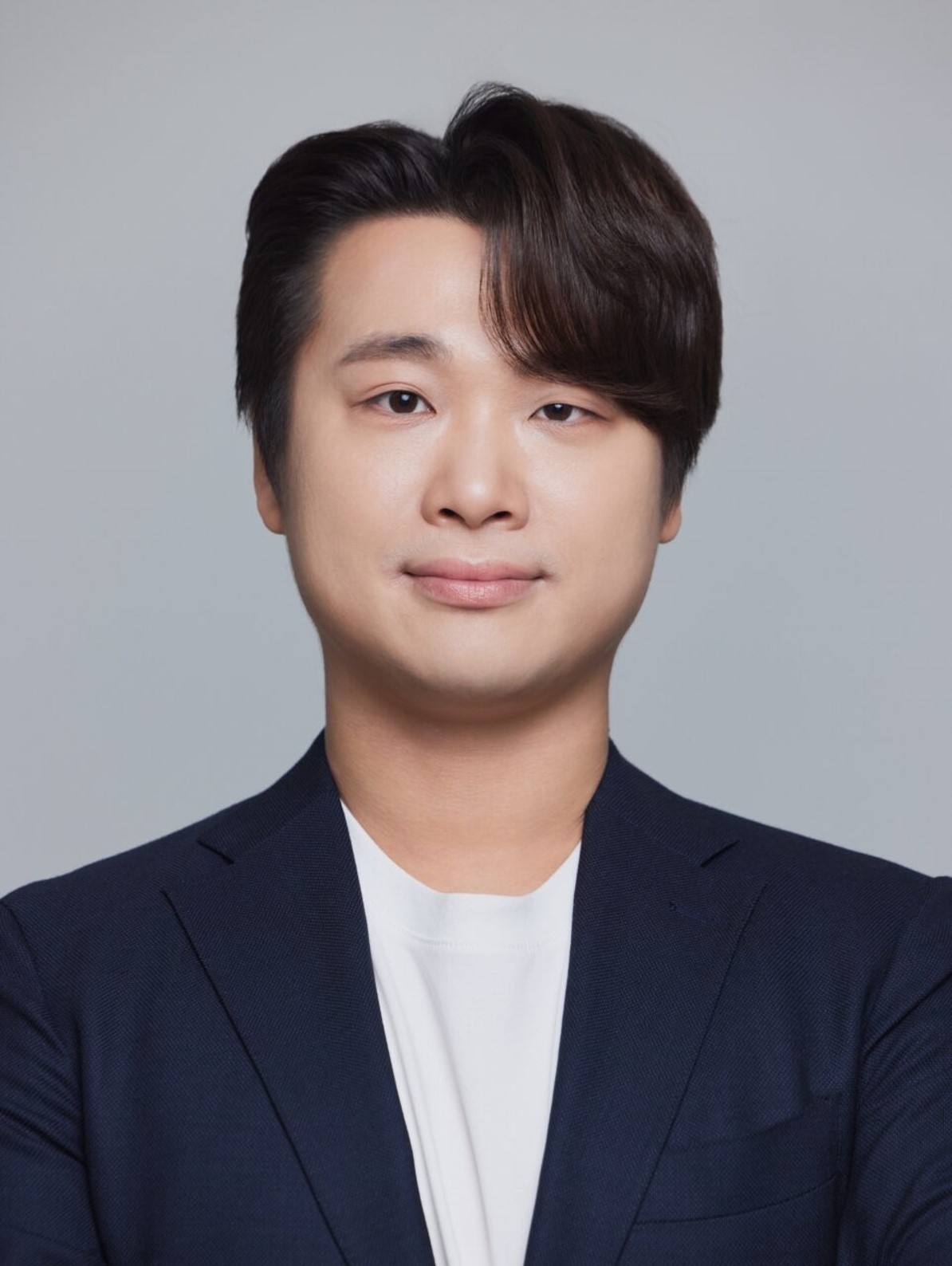 |
Prof. Jin Gyu Lee Jin Gyu Lee received the B.S. and Ph.D. degrees from Seoul National University. He subsequently held postdoctoral positions at the University of Cambridge and Imperial College London and joined Inria in Lille, France, in 2022. Since 2024, he has been with Seoul National University. His research interests include multi-agent systems, observer design, secure control, nonlinear oscillators, distributed optimization, adaptive control, neuronal networks, and neuromorphic engineering. Homepage: https://jingyulee92.wordpress.com |
Lecture 2
This talk introduces Controlled Multipliers Optimization (CMO), a framework that interprets constrained optimization from a control perspective. In CMO, Lagrange multipliers are viewed not only as dual variables but also as control inputs acting on continuous-time optimization dynamics, while constraint residuals are treated as outputs to be regulated. Starting from equality-constrained optimization, the talk explains how proportional-integral feedback and feedback linearization can be used to construct multiplier dynamics that drive constraint residuals to zero and guide the optimization variables toward stationary points. It also discusses the relationship between CMO and primal-dual gradient dynamics, including the effect of proportional gain on convergence behavior. This perspective provides a conceptual bridge between optimization algorithms and feedback control, and establishes a foundation for the subsequent treatment of an optimizer as a dynamical system interconnected with the plant.
Presenter Biography
 |
Dr. Yong Joo Do Yong Joo Do received the B.S. degree in Mechanical and Aerospace Engineering from Seoul National University in 2024. Since 2024, he has been pursuing a combined M.S./Ph.D. program in Electrical and Computer Engineering at Seoul National University. His research interests include stochastic processes, multi-agent systems, and learning-based control. |
Lecture 3
This talk introduces soft-constrained MPC for reference tracking as a systematic approach to mitigating infeasibility while retaining stability guarantees. State and terminal constraints are relaxed using slack variables, while hard input constraints are preserved and an artificial steady state is incorporated into the tracking formulation. These modifications enlarge the feasible region and permit controlled constraint violations when the corresponding hard-constrained problem is infeasible. The talk explains the roles of the slack penalties, terminal cost, terminal set, and artificial steady state, and presents the conditions used to establish asymptotic stability and input-to-state stability under additive disturbances.
Presenter Biography
 |
Dr. Hyeonyeong Jang Hyeonyeong Jang received the B.S. degree in Electrical Engineering from Hanyang University in 2024. Since 2024, he has been pursuing a combined M.S./Ph.D. program in Electrical and Computer Engineering at Seoul National University. His research interests include internal model principle, multi-agent systems, and learning-based control. |
Lecture 4
This talk presents dynamically embedded MPC, in which an evolving estimate of the solution to an optimal control problem is embedded in the internal state of a continuous-time dynamic controller running in parallel with the plant. Starting from the MPC formulation, the Lagrangian and Karush-Kuhn-Tucker residuals are used to construct projected primal-dual optimization dynamics, allowing continuous control-input generation without waiting for exact solver convergence at each sampling instant. The coupled plant-optimizer system is then analyzed using input-to-state stability and a small-gain argument, which clarifies why the optimization dynamics must be sufficiently fast relative to the plant. The talk also provides a step-by-step procedure for constructing the dynamic controller from the optimal control problem and discusses design choices including initialization and optimizer gain.
Presenter Biography
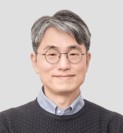 |
Prof. Hyungbo Shim Hyungbo Shim received the B.S., M.S., and Ph.D. degrees from Seoul National University and held a postdoctoral position at the University of California, Santa Barbara. After joining Hanyang University in 2002, he moved to Seoul National University in 2003. He has served in editorial roles for major control journals and is the director of the Engineering Research Center for Advanced Control and Instrumentation. His research interests include nonlinear-system stability, observer and disturbance-observer design, secure control systems, and synchronization. Homepage: http://hshim.wordpress.com |
Lecture 5
This talk examines how constraint satisfaction can be maintained when real-time MPC operates with optimization error or experiences abrupt reference changes. An Explicit Reference Governor (ERG) generates an auxiliary reference from the optimization residual and available safety margin, thereby moderating command changes when the optimizer cannot track its solution rapidly. Dynamic Constraint Tightening (DCT), in contrast, reserves constraint margin to absorb the input error produced by a finite number of optimization iterations and updates the tightening level as the plant state changes. Finally, the talk explains how these updates balance performance, conservatism, recursive feasibility, and stability.
Presenter Biography
 |
Dr. Hyungjo Byun Hyungjo Byun received the B.S. degree in Electrical and Computer Engineering from the University of Seoul in 2023. Since 2023, he has been pursuing a combined M.S./Ph.D. program in Electrical and Computer Engineering at Seoul National University. His research interests include reinforcement learning and multi-agent systems. |
Lecture 6
This talk illustrates the tutorial concepts through a vehicle-control simulation. A modular path- and yaw-rate-tracking environment combines linear time-invariant, linear time-varying, and nonlinear prediction models with conventional optimization solvers and a primal-dual-gradient-flow-based dynamic optimizer. Using common tracking costs, constraints, prediction horizons, and evaluation rules, the simulations compare optimization algorithms and prediction models. Through these comparisons, the talk shows how the choice of optimizer and prediction model affects control performance. It also discusses practical choices for the vehicle model, sampling and prediction horizons, constraints, computational budget, and performance metrics, as well as future use of an Explicit Reference Governor (ERG) and Dynamic Constraint Tightening (DCT).
Presenter Biography
 |
Dr. Jinsung Kim Jinsung Kim received the B.S. degree in Mechanical and Automotive Engineering from Kookmin University in 2007 and the M.S. and Ph.D. degrees in Mechanical Engineering from the Korea Advanced Institute of Science and Technology (KAIST) in 2009 and 2013, respectively. He joined Hyundai Motor Company in 2013, where he works on control-software development for electrified-vehicle propulsion systems. From 2019 to 2020, he was a visiting scholar at the University of Pennsylvania. His research interests include observer design, data-driven control, and optimal control of electric vehicles. |
Tutorial 4
Overview
| Time | Program | Speaker |
|---|---|---|
| 13:00 – 13:10 | Opening & Introduction | Organizer |
| 13:10 – 14:25 | Learning-Based Modeling of Vehicle Dynamics: Parametric, Non-parametric, and Semi-parametric Approaches |
Prof. Cheolhyeon Kwon (UNIST) |
| 14:25 – 14:35 | Break | |
| 14:35 – 15:50 | Model Predictive Control as Online Policy Improvement: A Reinforcement Learning Perspective |
Prof. Kyunghwan Choi (KAIST) |
Lecture 1
Parametric, Non-parametric, and Semi-parametric Approaches
Presenter Biography
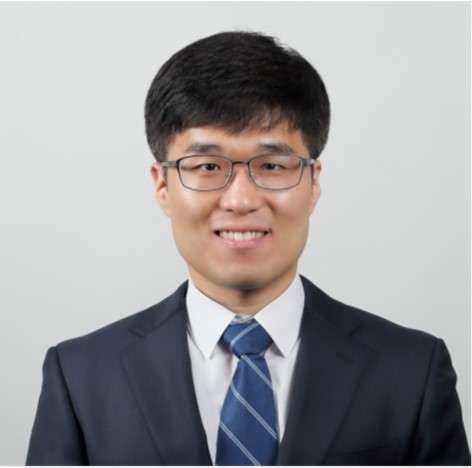 |
Prof. Cheolhyeon Kwon Cheolhyeon Kwon (Member, IEEE) received a B.S. degree in Aerospace Engineering from Seoul National University, Seoul, South Korea, in 2010, and an MS degree and Ph.D. from the School of Aeronautics and Astronautics, Purdue University, West Lafayette, IN, USA, in 2013 and 2017, respectively. He is currently an associate professor with the Department of Mechanical Engineering, UNIST, Ulsan, South Korea, and the director of the High-assurance Mobility Control laboratory. His research interests include control and estimation for dynamical cyber-physical systems (CPS), networked intelligent autonomy, and multi-agent system networks. His research goal is to pursue high assurance CPS design through the lens of control and estimation theory foundation, with applications to systems with mobility, such as autonomous driving, advanced air mobility, etc. |
Lecture 2
A Reinforcement Learning Perspective
Presenter Biography
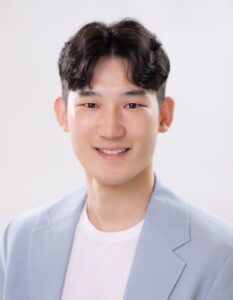 |
Prof. Kyunghwan Choi Kyunghwan Choi received the B.S., M.S., and Ph.D. degrees in mechanical engineering from the Korea Advanced Institute of Science and Technology (KAIST), Daejeon, South Korea, in 2014, 2016, and 2020, respectively. He is currently an Assistant Professor with Cho Chun Shik Graduate School of Mobility, KAIST, and the Director of the Mobility Intelligence and Control Laboratory (MIC Lab). His research focuses on optimal and learning-based control for connected, automated, and electrified vehicles (CAEVs). |
Tutorial 5
Overview
| Time | Program | Speaker |
|---|---|---|
| 14:00 – 14:15 | Opening & Introduction | Organizer |
| 14:15 – 14:35 | Railway Robotics Use Cases & System Architecture | Claire NICODEME |
| 14:35 – 15:05 | Perception in Railway Robotics | Claire NICODEME & Daisy CHAPMAN CHAMBERLAIN |
| 15:05 – 15:15 | Break | |
| 15:15 – 15:40 | Drones for Railway Inspection and Monitoring | Matthieu LEVEQUE |
| 15:40 – 16:05 | Telecommunications & Connectivity Constraints | Marc FOURNIER |
| 16:05 – 16:15 | Break | |
| 16:15 – 16:30 | Ethics, Security & Human Factors in Deployment | Claire NICODEME & Marc FOURNIER & Daisy CHAPMAN CHAMBERLAIN |
| 16:30 – 16:40 | From Research to Deployment – Lessons Learned | Claire NICODEME |
| 16:40 – 17:00 | Q&A | All |
Abstract
Presenter Biography
| Dr. Claire NICODEME AI Project Owner (Alstom) Industrial Artificial Intelligence & Robotics Topics of recent interest include: – Industrial Robotics, – Railway Inspection & Automation, – Perception Systems in Real-World Environments, – AI Ethics. |
Presenter Biography
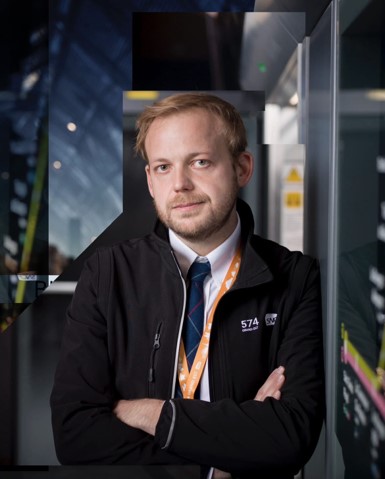 |
Matthieu LEVEQUE Head of the Mobilités Lab (SNCF VOYAGEURS) and Connectivity Business Development Engineer (e.SNCF Solutions) Topics of recent interest include: – Artificial Intelligence for Transportation – Accessible Mobility and Inclusive Design – Digital Transformation and Connectivity – Living Labs and Open Innovation Ecosystems |
Presenter Biography
 |
Marc FOURNIER Engineer Innovation & Connectivity Topics of recent interest include: – Robotics Deployment & Connectivity (wired, wireless, latency), – Communication Systems for Industrial Robotics |