
Workshop
Objective
This workshop brings together researchers working on soft haptic interfaces, covering topics from smart materials and soft haptic actuator/sensor fabrication to system integration and haptic rendering. The goal is to share recent advances, foster cross-disciplinary discussion, and identify future research directions in skin-conformal multi-modal haptic technology.
Abstract
Haptic gloves are increasingly employed across a wide range of human-machine interaction scenarios, including user interaction with virtual environments in metaverse and XR platforms, teleoperation of remote robotic systems, and robot learning frameworks such as sim-to-real transfer, where human demonstration data collected via haptic gloves serves as training input for robotic manipulation policies. In all of these contexts, the quality and naturalness of tactile feedback directly determines the fidelity of the interaction, the accuracy of the data collected, and ultimately the performance of the systems that depend on it.
However, existing haptic glove technologies rely on vibrotactile motors or cable-and-brake mechanisms that suffer from bulk, limited tactile modalities, and occlusion of natural skin contact, leaving pressure distribution, thermal sensation, and surface micro-texture largely unaddressed.
This workshop addresses these challenges through contributions spanning ultra-thin multi-modal flexible haptic actuators based on electroactive polymer materials, DLP-based flexible substrates with DIW-based liquid metal electrodes and temperature sensor arrays, high-resolution multi-modal flexible tactile sensors, integrated driver hardware and software development kits, haptic rendering algorithms for flexible actuators, and novel interaction methods enabled by skin-conformal haptic interfaces. Together, these contributions chart a coherent path from foundational soft material science to deployable tactile interaction systems applicable to metaverse platforms, teleoperation, sim-to-real robot learning, surgical simulation, and next-generation flexible sensory displays.
Frontiers Session
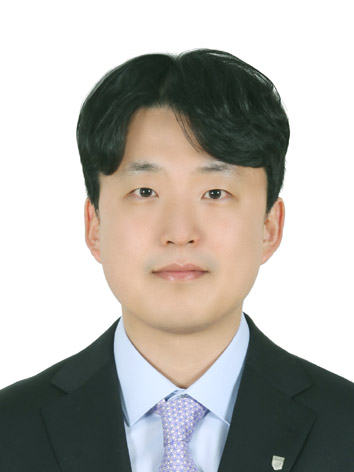 |
Sungho Suh
Korea University
Human-Centric Multimodal Perception for Physical AI
Abstract
In real-world environments, intelligent systems must understand human activities and context to interact safely and effectively with people. This talk introduces our research on human-centric multimodal perception using wearable sensors, vision, and other contextual signals. I will present recent progress in multimodal learning for human activity understanding and discuss how these approaches contribute to the development of Physical AI systems that operate reliably in real-world environments.
Biography
Sungho Suh is an Assistant Professor in the Department of Artificial Intelligence at Korea University. He received his Ph.D. in Computer Science from the Technical University of Kaiserslautern, Germany, in 2021. His research focuses on multimodal learning for human activity understanding, wearable sensing, and Physical AI systems that integrate perception and action in real-world environments. His recent work explores multimodal sensing and foundation models for human activity recognition and human–robot interaction. He has received several international awards, including the IMWUT Distinguished Paper Award (2024), UCAmI Best Paper Award (2024), and ISWC Best Paper Award (2023). He currently serves as an Associate Editor for Proceedings of the ACM on Interactive, Mobile, Wearable and Ubiquitous Technologies (IMWUT).
|
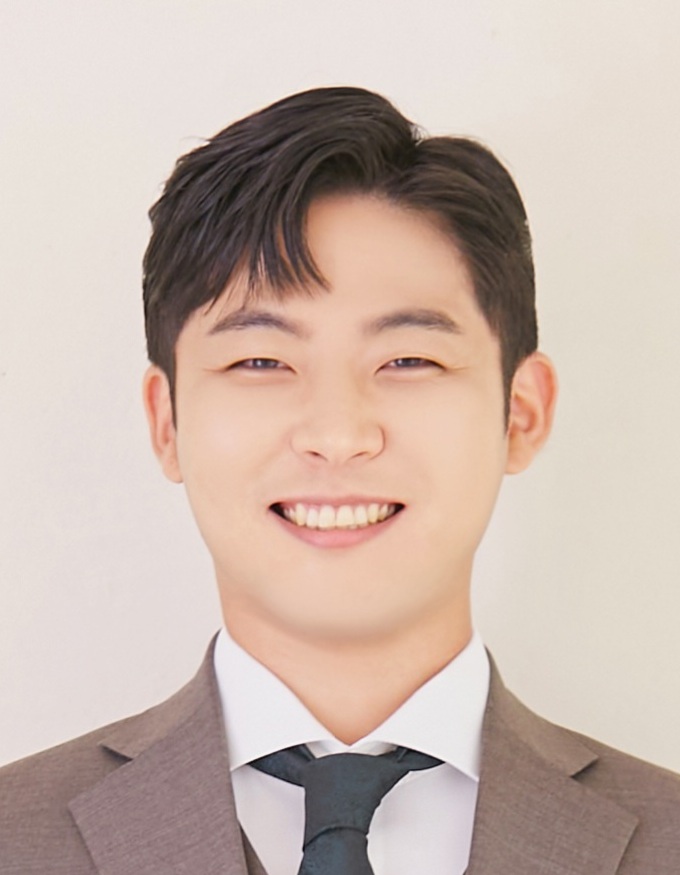 |
Wonje Jang
Hankuk University of Foreign Studies
3D Spatial Understanding and Mapping for Intelligent Mobility
Abstract
Understanding complex 3D environments is a core capability of intelligent mobility systems. Intelligent mobility must perceive and interpret 3D surroundings — avoiding obstacles, following roads, and navigating safely within dynamic environments. In addition, maps are often used to provide compact representations of dynamic environmental information for mobility systems to navigate safely. This talk introduces recent research on 3D spatial understanding and mapping systems for intelligent mobility. The presentation begins with 3D sensor-based approaches for understanding spatial environments, followed by approaches for representing the surrounding environment into maps for intelligent mobility. The talk then shares practical considerations for integrating these technologies into real-world mobility systems and concludes by outlining future directions for spatial intelligence.
Biography
Wonje Jang is an Assistant Professor in the Division of AI Data Convergence at Hankuk University of Foreign Studies (HUFS), where he has been serving since March 2025. Prior to joining HUFS, he was a Senior Research Engineer at Hyundai Motor Company, contributing to autonomous driving recognition and perception technology from
2023 to 2025. He received both his B.S. and Ph.D. degrees in Electrical and Electronic Engineering from Yonsei University, Seoul, South Korea, in 2015 and 2023, respectively, at the Computational Intelligence Lab. His research interests include artificial intelligence, 3D computer vision, and their applications to intelligent mobility systems. |
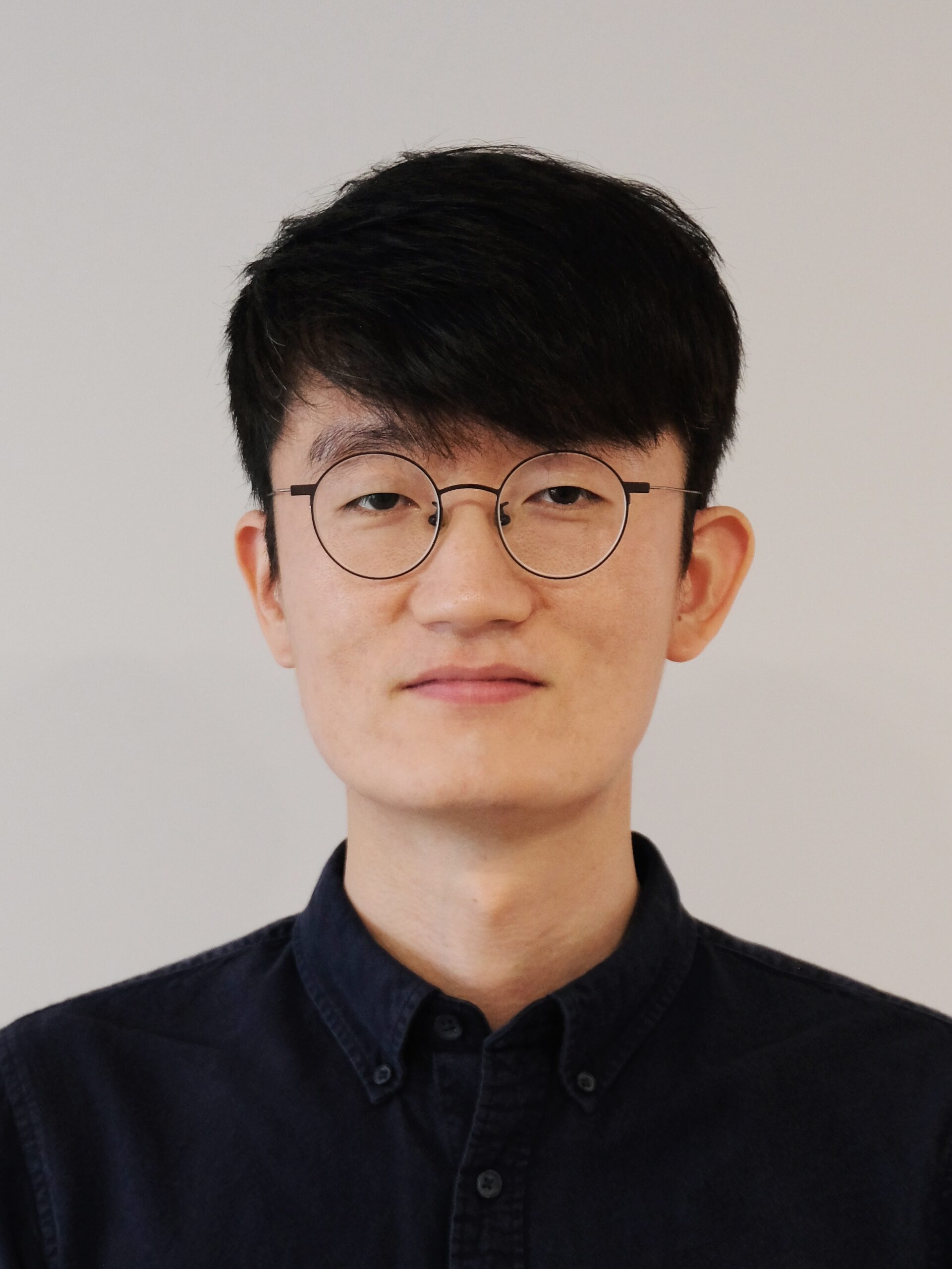 |
Jaehyeon Kang
Gachon Unversity
Information-Driven Spatial Intelligence: From Sensor Calibration to Field Robotics
Abstract
This talk presents a research journey in robot spatial perception, based on the principle that reliable spatial understanding begins with accurate, information-rich sensing. The talk opens with foundational work in sensor calibration, including LiDAR intrinsic modeling and targetless camera-LiDAR extrinsic calibration. Building on this, an information-theoretic perspective is introduced, where Normalized Information Distance (NID) serves as the basis for a semantic error measure in visual odometry and SLAM, and is further extended to retraining-free camera localization in geometry-only point cloud maps. Finally, the talk moves to field robotics, presenting a real-time crop counting system for dense and unstructured orchards.
Biography
Jaehyeon Kang is an Assistant Professor in the Department of Computer Engineering at Gachon University, Korea. He received his B.S. and Ph.D. in Electrical and Computer Engineering from Korea University in 2011 and 2018, respectively, and previously served as a Senior Researcher at the Korea Institute of Industrial Technology (KITECH). His research interests include Physical AI, spatial intelligence, robot perception, SLAM, and sensor calibration.
|
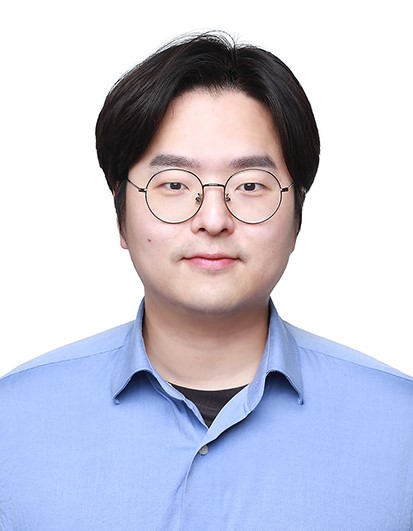 |
Sijun Ryu
Yeungnam University
A Rocker-Bogie Mechanism Design via Track Chain and Manufacturing Automation through Imitation Learning
Abstract
Reducing the number of actuators while preserving mobility over rough terrain has been the central goal of my mobile robot research, and this talk traces how that goal has shaped a series of new locomotion mechanisms. The talk opens with the Damper-Driven Rocker-Bogie, which uses a rotary damper to transmit torque to the rocker-bogie pivot and cuts the actuators from six to two. Building on this, the Tracker-bogie integrates a half rocker-bogie with a track and an adaptive tensioner, so that a single actuator can overcome obstacles and traverse deformable terrain. The concept is then extended to SQuaT, a four-Tracker-bogie platform with compliant joints that improves climbing ability, energy efficiency and shock absorption using only four actuators. Finally, the talk moves to industry work, presenting imitation-learning-based manipulation for contact-rich tasks such as cable insertion.
Biography
Sijun Ryu is currently an Assistant Professor at Yeungnam University. He received his Ph.D. degree in Mechanical Engineering from Hanyang University, with research focused on robotic mechanism design, physical intelligent mechatronic systems. His research interests include robot mechanism synthesis, field robotics, embedded robotic systems, and future AI-integrated autonomous robotic systems. His recent work focuses on practical robotic mechanisms and intelligent robotic systems for mobility and manufacturing applications.
|
Frontiers Session
 |
SPECIAL TALK
Kyoungchul Kong
KAIST
What Is a Platform in Physical AI? From One Robot to Many Builders
Abstract
Physical AI is expected to reach its own “GPT moment” by scaling teleoperated data, yet physical interaction data does not exist at internet scale, and teleoperation records human error along with human skill. This talk discusses what a “platform” means as the field converges on a hierarchical separation between judgment (AI) and execution (control): a verified execution layer that absorbs physical errors through 1 kHz real-time control and accepts any foundation model through a standard interface. The hardware platform, called Physics-ready Onboard Robot Control Engine (phorce), and a teaching-based approach to motion memory will also be introduced. An evidence that is not one robot but many builders is shown as well: ten undergraduate teams completing robots in 100 hours, and nine international teams at the IFAC Wearable Robot Challenge 2026.
Biography
Kyoungchul Kong is a Professor in the Department of Mechanical Engineering at KAIST, where he directs the Exoskeleton Laboratory (EXO-Lab) and the Human Physica AI Research Center. He is also the founder of Angel Robotics (KOSDAQ: 455900), where he currently serves as Chairman of the Board and Head of the Future Technology Institute. He received his Ph.D. in Mechanical Engineering from the University of California, Berkeley, under the supervision of Prof. Masayoshi Tomizuka. His research interests include the design and control of wearable robots, human motion intent recognition, and Physical AI platforms built on physics-ready actuation and real-time control. His team won the gold medal in the Powered Exoskeleton Race at Cybathlon 2020 and Cybathlon 2024, following a bronze medal in 2016. He has served as Chair of the IFAC Technical Committee on Robotics (TC 4.3) and organized the IFAC Wearable Robot Challenge at the IFAC World Congress 2026.
|
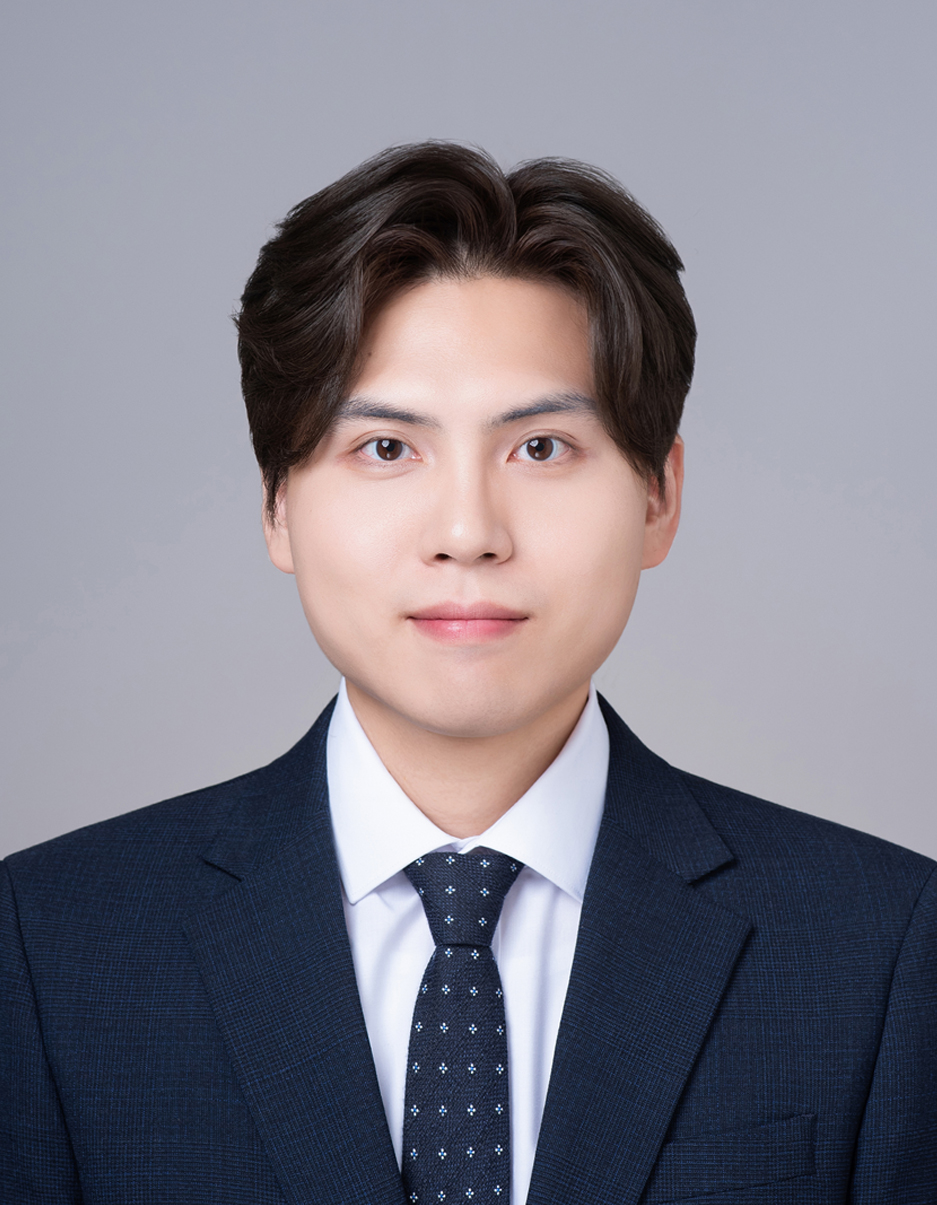 |
Hyesu Jang
Seadronix
Enabling Maritime Autonomous Navigation: From Radar Sensing to Coastal Perception
Abstract
Maritime environments present fundamental challenges for autonomous navigation due to degraded sensing conditions such as fog, glare, waves, and featureless open waters. Radar is a promising sensing modality for such conditions, as it operates reliably regardless of weather and lighting. This talk introduces radar-based perception and SLAM systems developed for robust maritime autonomy. Starting with radar characteristics, the presentation discusses how W-band radar and X-band radar can serve as primary sensors for localization and mapping in coastal and harbor environments. The talk also covers multimodal sensor fusion strategies that combine radar with complementary sensors to enhance situational awareness in complex coastal scenes. Ongoing research directions are discussed, including learning-enhanced coastal perception and maritime autonomy.
Biography
Hyesu Jang received the Ph.D. in Mechanical Engineering from Seoul National University (SNU) in 2024. He received the M.S. and B.S. from the Korea Advanced Institute of Science and Technology (KAIST) in 2020 and 2018, respectively. He is currently a Robotics Researcher at Seadronix, where he leads the development of radar SLAM and sensor-fusion algorithms for autonomous vessel systems. His research interests include radar-based perception and SLAM, multimodal sensor fusion, maritime autonomous navigation, and field robotics.
|
 |
Sung-Hyuk Song
Sogang University
Robotic Innovation with Highly-adaptable System to Surpass Human Capability in Unstructured Environments
Abstract
Recent breakthroughs in artificial intelligence have driven rapid advancements in complex robotic systems such as humanoids. Once challenging to control, these systems now achieve natural movement and perform sophisticated tasks through imitation learning. However, as humanoids remain mechanical devices, their investment costs must be carefully weighed against their expected benefits. Just as the Industrial Revolution significantly enhanced productivity, the speed and efficiency of modern robotics must be rigorously compared to existing automation. Beyond mere human mimicry, there is a growing need for a new generation of hardware that can significantly surpass human performance in specific task domains. This presentation proposes a new evolutionary direction for robotics, focusing on a hardware development approach centered on highly-adaptable structures.
Biography
Sung-Hyuk Song has been a Professor in the Department of Electronic Engineering at Sogang University since March 2026. He received his B.S. degree in Physics from Korea University and his Ph.D. degree in Mechanical and Aerospace Engineering from Seoul National University. He previously served as a professor at Dongguk University and as a researcher at the Korea Institute of Machinery and Materials (KIMM). His research expertise lies in soft robotics and mechanism design. His major achievements include the development of a morphing wheel and universal grippers.
|
Frontiers Session
 |
Gyeongsik Moon
Korea University
Robust Robot Learning from Open-World Monocular Human Videos
Abstract
Teaching robots to manipulate objects robustly requires data far more diverse than teleoperation or simulation alone can provide. In this talk, I present our lab’s work on turning open-world monocular human videos, especially egocentric footage of everyday hand-object interaction, into reliable supervision for robot learning. Because monocular video offers only noisy, occlusion-prone, and depth-ambiguous observations, a central theme of our work is recovering physically grounded 4D structure from this single, unconstrained camera stream alone, without relying on auxiliary sensors. This includes recovering full-body 4D human motion from egocentric monocular video, and generating the trajectory of the camera or agent itself as it moves through the scene. Building on these reconstructions, we treat kinematic estimation, rendering, and physics simulation as complementary signals rather than ground truth, using reinforcement learning to fuse them into physically consistent, contact-rich manipulation motion, and further retarget this motion onto physics-based humanoid platforms for loco-manipulation. Together, these directions aim to convert the vast, uncurated supply of monocular human video into structured, physically grounded data for building robots robust to the open world.
Biography
Gyeongsik Moon is an Assistant Professor at Dept. of CSE, Korea University, and leads the Visual Computing and AI Lab. Before joining Korea University in 2025, he was an Assistant Professor at Dept. of EECS, DGIST in 2024 and a Postdoctoral Research Scientist at Reality Labs Research, Meta from 2022 to 2024. He finished his Ph.D. in 2021 at SNU. During the Ph.D. course, he was a Research Scientist Intern at Meta Reality Labs in 2019. He won first place in two international 3D hand and body reconstruction competitions, held in ICCV 2017 and ECCV 2020, respectively. He is a recipient of the Google Ph.D. Fellowship in 2020. He received Best Thesis Awards from both EE and the College of Engineering of SNU. He serves as an Area Chair for CVPR/ICCV/NeurIPS/ICML/WACV and an organizer of the CV4Metaverse workshop at CVPR 2025.
|
 |
Myung-Hwan Jeon
Kumoh National Institute of Technology
Visual Perception for Visually-Assisted Robot Manipulation
Abstract
Recent advances in deep learning and vision models have improved robot perception, yet robotic manipulation in real-world environments remains challenging, especially for unseen objects under occlusion and clutter. In this talk, I will present my research on developing generalizable perception methods for robotic manipulation. The talk covers a series of approaches addressing object pose estimation, challenging perception scenarios, and integration with recent vision foundation models. I will highlight how these works collectively move toward scalable and training-free robotic manipulation, and discuss future directions for deploying robots in diverse real-world environments.
Biography
o Sep. 2025 – Current, Assistent Professor, Kumoh National Institute of Technology (KIT), Korea
o Sep. 2024 – Aug. 2025, Postdoctoral Researcher, University of Illinois Urbana-Champaign (UIUC), US (Advisor: Prof. Joohyung Kim) o Jan. 2023 – Aug. 2024, Postdoctoral Researcher, Seoul National University (SNU), Korea (Advisor: Prof. Ayoung Kim) o Mar. 2020 – Feb. 2023, Ph.D., Robotics Program, Korea Advanced Institute of Science and Technology (KAIST), Korea, (Advisor: Prof. Ayoung Kim) |
 |
Yeongmin Ko
Kyungpook National University
Towards Data-Efficient Approaches for Robotics and AI
Abstract
Data efficiency has become a critical challenge in robotics, where collecting large-scale labeled data is often expensive, time-consuming, and sometimes infeasible in real-world environments such as hazardous. These constraints limit the scalability and practical deployment of data-driven robotic systems. In this talk, I highlight the importance of data-efficient approaches in robotic perception and AI. I introduce representative methods, including self-supervised learning and simulation-to-real transfer, that reduce data dependency while enabling robust and adaptable robotic intelligence in data-scarce scenarios.
Biography
o Sep. 2024 – Current, Assistant Professor, Kyungpook National University (KNU), South Korea
o Sep. 2023 – Aug. 2024, Postdoctoral Researcher, GIST, South Korea Education o Mar. 2017 – Aug. 2023, Ph.D., Department of Electrical Engineering and Computer Science, GIST, South Korea (Advisor: Prof. Moongu Jeon) o Mar. 2013 – Feb. 2017, B.S., Department of Electrical Engineering and Computer Science, GIST, South Korea |
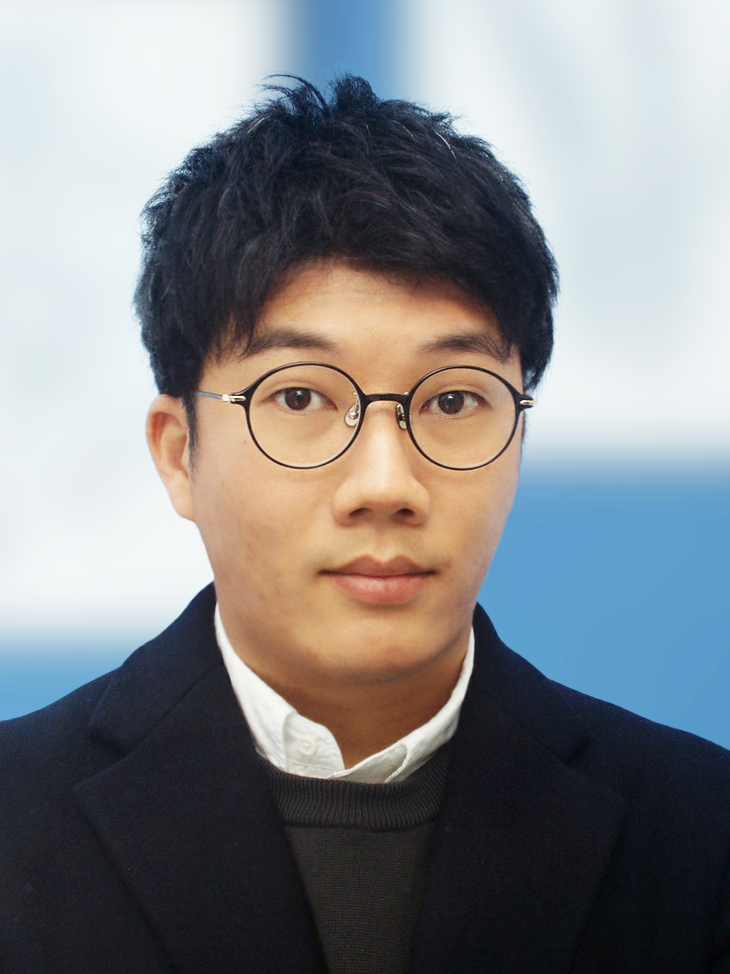 |
Yoichi Masuda
University of Osaka
Brainless Robotics through Highly Distributed Muscle, Receptor, and Neural Devices
Abstract
Robots operating in unpredictable environments need mechanisms that enable them to respond to changing conditions with limited computational resources. Adaptive animal movement is supported by computation in the brain, the functions of muscles, sensory receptors, and reflex circuits distributed throughout the body, and physical interactions between the body and the environment. This talk introduces our work on brainless robotics, which aims to mechanically reproduce the motor intelligence embodied in animals’ peripheral systems.
Our approach implements muscle, receptor, and neural functions using mechanical and pneumatic devices, embedding local feedback mechanisms throughout the robot body to adjust movement in response to stimuli. By coupling actuation, sensing, and control without electronic circuits, we aim to distribute numerous feedback mechanisms throughout the body while limiting the growth of wiring and peripheral circuitry. We investigate how interactions among these mechanisms, the body, and the environment generate movements appropriate to different situations. I will present studies on motion generation through intrinsic actuator properties and local feedback realized by mechanical and pneumatic devices. Using gait generation, gait transitions, and postural stabilization as examples, I will discuss how the stimulus responsiveness of physical devices distributed throughout the body contributes to coordinated whole-body movement. Biography
Yoichi Masuda is a Lecturer at the Future Innovation Center, Graduate School of Engineering, the University of Osaka, Japan, where he also holds a concurrent appointment in the Department of Mechanical Engineering. He received the B.E. and M.E. degrees in Systems Engineering from Wakayama University in 2013 and 2016, respectively, and the Ph.D. degree in Mechanical Engineering from the University of Osaka in 2019. Since joining the university in 2019, he has been engaged in research on embodied intelligence, bio-inspired robotics, and robot locomotion. He received the 2023 Advanced Robotics Best Paper Award.
|